Behaviour Change

PROPAGANDA FOR CHANGE is a project created by the students of Behaviour Change (ps359) and Professor Thomas Hills @thomhills at the Psychology Department of the University of Warwick. This work was supported by funding from Warwick's Institute for Advanced Teaching and Learning.

Tuesday, March 5, 2013


This is an advertisement that the condom company Durex designed based on the widespread myth that the world would end on December 21 2012. This print ad is an example of the Dimensionality Alteration Template in use. There are four subcategories under the general umbrella of this template: the parameter connection version, the multiplication version, the division version, and the time leap version. The parameter connection seems to be the most relevant in terms of this advertisement since by definition, the parameter connection is creating a dependent relationship between two previously unrelated parameters. In this case, the presumed end of the world and using a condom are posed in the same scenario linking the two.
Further illustrating strong advertising techniques, by using a well-known colloquial phrase, the advertisers have used another template of advertising as well. The use of the replacement template is clear since it plays on the multiple uses of the word “bang”. The phrase “go out with a bang” usually is associated with a dramatic and usually successful termination to a situation; but placing it within the context of Durex, the advertisers shift the viewers thoughts from one use of the word “bang” to another, transforming the phrase to custom fit the message they are trying to portray.

Goldenberg, J., Mazursky. D., & Solomon, S. (1999). The fundamental templates of quality ads. Marketing Science, 18, 333-351

 Posted by Panayiotou

Stops Usain Bolting


This advert by Loctite advertises super glue.

The template of extreme situation mentioned in Goldenberg, Mazursky and Solomon (1999) is used as the advertising technique in this print ad. The idea of the template is that it shows a product performing outside of the limits of its normal use. This is done to exaggerate the key use of the product.

This template can be seen in this advert by the running shoes of Usain Bolt still being at the starting line. This is to demonstrate the strength of the product, as you are supposed to assume that the running shoes are glued down. Also the final line in the advert, “A little super glue can help London fix anything” is suggesting to the viewer that the super glue can fix any problem they might have. This displays the product acting outside of the limits of its normal use and therefore exaggerates they key use of the product.
 
References:
Goldenberg, J., Mazursky, D., & Solomon, S. (1999). The fundamental templates of quality ads. Marketing Science, 18(3), 333-351.

This advertisment is used to promote Bic disposable razors, and is an example of the pictoral analogy template proposed by Goldengerg, Mazursky and Solomon (1999). What the advertisment does is compare a razor to a lawnmower. The salient feature that is common between a razor and a lawnmower is that they are both designed to cut back long substances, either hair or grass. As grass is much tougher than hair, it would be impressive that a cheap razor would be strong enough to cut it, and thus a comparison is made which promotes the feature that would encourage a consumer to purchase a razor.


Goldenberg, J., Mazursky, D., & Solomon, S. (1999). The fundamental templates of quality ads. Marketing Science, 18(3), 333-351.

Make time, make Tetley


This Tetley’s tea advert uses Absurd Alternative version of the Extreme Situation Template proposed in Goldenberg, Mazursky and Solomon (1999). The advert contains the typical elements of this template. It demonstrates an unexpected shift in the consumer’s frame of mind into an imaginary status, - typically when you post on facebook your acquaintances don’t appear in your house. It also fulfils this template as the absurdity of the alternative option is obvious and recognizable by the consumer (1999). This, however, could be seen as more subtle, that is the alternative does not restrict you from use of the product. Rather the product is framed in a more positive situation that the alternative. The advert presents a familiar situation but takes it out of context, creating an obviously absurd scene. The use of social media appeals to familiarity, and the use of satire to create humour makes the advert memorable. The article by Goldenberg, Mazursky and Solomon claims that the use of the creative templates in advertising should provide a “balance between surprise and regularity” (p.337). I think this advert does this to great effect, where the absurdity of the situation stems from real irritations about online communication. Therefore although the situation is unrealistic, the consumer can still identify with it.

Goldenberg, J., Mazursky, D., & Solomon, S. (1999). The Fundamental templates of quality ads. Marketing Science. 18(3). 333-351.

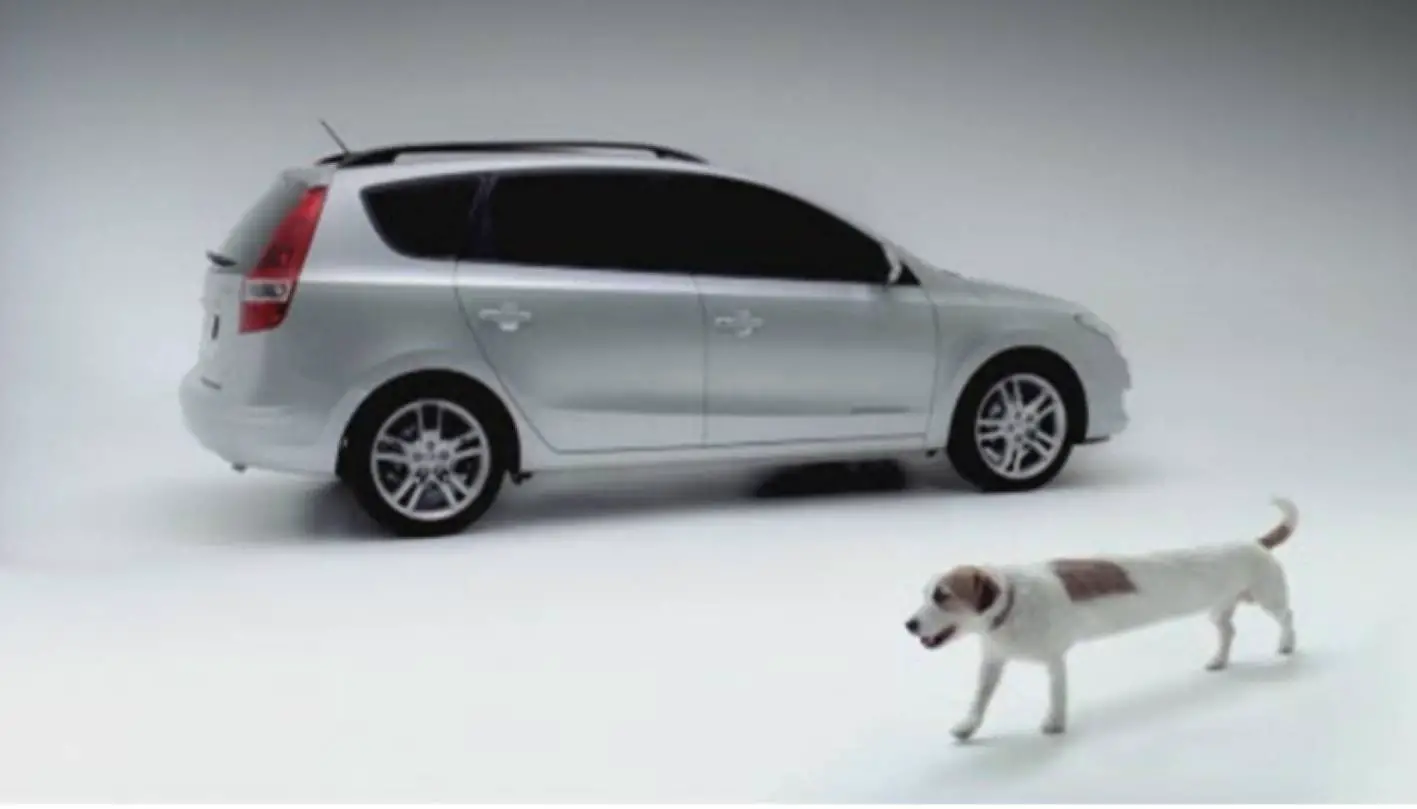
Hyundai need no words to describe the benefits of their product...


This advert for Hyundai's i30 range uses Goldenberg, Mazursky & Solomon's (1999) "Pictoral Analogy" creativity template. The advertisement can be depicted schematically; the advertisers need to illustrate a link between their product, and the message they want to convey about that product. The link in this case must connect the product (car) to the message (that the car has lots of space), by creating a symbol set and product space that are clearly linked by size. Therefore, Hyundai have linked the product space (the stretched car) with a symbol set that depicts 'having been made longer', in this case-the dog. This 'pictoral analogy' allows the consumer to create a link quickly and effectively between increased size of the dog, and therefore the increased size of the car - appealing to customers who need more space in their car.

References:

Goldenberg, J., Mazursky, D., & Solomon, S. (1999). The fundamental templates of quality ads. Marketing Science18(3), 333-351.

Fairy 20,000 dishes


This advert uses dimensionality alteration to help establish fairy as a household essential.  In this advert, dimensionality alteration is achieved through speeding up time in the second part of the advert (Goldenberg, Mazursky, & Solomon, 1999).  The advert was released at the time of the Olympics where adults and children admired the Olympians and wanted to be like them, Fairy used this to their advantage.  By using dimensionality alteration and speeding up time, they show the brand has history and heritage because it has been used over a long period of time to ‘create a champion’.  It also suggests to the viewer that it will continue to be used as this particular brand of washing up liquid lasts a long time.    
It also uses elements of pictorial analogy.  The advert is describing and showing the development of an athlete.  This is a lot of continuous hard work over a long period of time.  The athlete symbolises Fairy: that it is hard working and will last a long time. 
 The music used in the advert starts off simple and almost childlike and develops along with the child into a more complex tune.  It is used to evoke emotion congruent to the advert.  It further helps create a sense of history with the brand.  Research has shown that when music is played alongside advertisements, when it is congruent to the message from the brand, it helps to increased buying power in consumers (Alpert, Alpert, & Maltz, 2005)


The dire consequences of not eating Snickers.


This advert for Snickers bars uses Goldenberg, Mazursky, and Solomon’s (1999) “Consequences” creative template.  The advert portrays the consequence of not eating a snickers (being an irrational “diva”) and then counteracts this with the result of eating a snickers (returning to normal).  This relates specifically to Goldenberg et al.’s “inverted consequences template,” as it focuses on the implications of not buying/consuming the advertised product.  It also incorporates the “extreme consequences” version of the template, as depicting the consumer as a completely different person is highly unrealistic. 
The advert also fits in to the two requirements of this template: 1) Consequences based on a true fact (i.e. often hunger can cause stress and irritation); 2) The absurdity and extreme unrealism of the consequences are obvious (i.e. transforming into a different person).

References:
Goldenberg, J., Mazursky, D., & Solomon, S. (1999). The Fundamental Templates of Quality Ads. Marketing Science, 18, 333-351.

Red Bull Gives You Wings


This is an advertisement by Red Bull promoting their popular slogan “Red Bull Gives You Wings”. The commercial shows a series of clips in which people are participating in extreme sports and appear to be pushing boundaries. The finishing tagline, “the only limit, is the one you set yourself”, highlights the notion of breaking boundaries and implies that Red Bull facilitates the activities that are seen in the advert that some may deem impossible to do, by giving them wings so to speak.

This advert utilisies the “Extreme Situation Template” described by Goldenberg, Mazursky and Solomon (1999), by inducing the feeling that the activities represented are impossible/unrealistic to the audience, and therefore that it is Red Bull that has enabled those in the advert to participate in such extreme activities. In doing so it enhances the prominence of Red Bull as an energy giving product.

In particular, the final clip of an astronaut skydiving from space out of a helium filled balloon, uses the “extreme attribute” version of this template (Goldenberg et al, 1999), as it exaggerates the effectiveness of Red Bull implying that something literally out of this world can be achieved by consuming this product.

References:

Goldenberg, J., Mazursky, D., & Solomon, S. (1999). The fundamental templates of quality ads. Marketing Science, 18(3), 333-351.

Monday, March 4, 2013


PCRM: Fast food consequences

This advert is an example of the ‘extreme consequences’ technique to highlight the problems associated with fast food. The advert focuses on the grieving partner of a deceased man who is seen clasping a burger – the seeming contributor to his death from heart disease. The idea of consequences of fast food is further emphasised at the end of the advert when the narrator suggests the eating unhealthily results in high blood pressure, high cholesterol and heart attacks.

Goldenberg, J., Mazursky, D. et al. (1999). The fundamental templates of quality ads. Marketing Science, 333-351.

You worry about me. But why not about yourself.


This is yet another anti-smoking advertisement to persuade people quit smoking. However, the impact of this advertisement is enormous and indeed very touching.
If you haven't watch the video, I will recommend you to watch it first before continue reading. Words simply cannot describe how heart-stirring this advertisment is. 

It talks about how smokers react when suddenly a child of age 7-8 come to them and ask for a lighter to lit a cigarette in his/her hand. When the smokers refuse to borrow and tell them how bad smoking is, the child hand them over a brochure. Inside the brochure, it says "You worry about me. But why not about yourself." 

In this advertisement, it employs the extreme situation template and imaginary interactive template described in Goldenberg, Mazursky, & Salomon's paper (1999). It is highly unlikely that a child of age 7-8 will come to you and ask for a lighter with a cigarette in their hand (extreme situation template). And if you happen to be in such scenario, will you tell the child the same thing about how bad smoking is? Will you throw away your cigarette or instead throw away the brochure(imaginary interactive template)?

Quit Smoking.

Godfrey Leung

Beautiful Wasn't she?


This advert is part of a drink driving campaign.  The advert uses the consequences template by Goldernberg, Mazurksy  and Solomon (1999). In particular, it uses the extreme consequences version to show that drink driving can lead to very serious and dangerous consequences, the consequence in this case being the the death of an innocent person. Also, by asking the question ‘beautiful wasn’t she?’ and stating  ‘that’s a heavy price to pay for being reckless’ the advert is very emotive and to some extent elicits guilt. Guilt has been found to be a useful persuasive tool. In a study it was found that guilt appeal charity adverts increased guilt arousal which was positively related to donation intention (Hibbert, Smith, Davies, & Ireland, 2007). Therefore, suggesting that guilt is an effective persuasion technique.


References

Goldenberg, J., Mazursky, D., & Solomon, S. (1999). The fundamental templates of quality ads. Marketing Science, 18, 333-351.
Hibbert, S., Smith, A., Davies, A., & Ireland, F. (2007). Guilt appeals: Persuasion knowledge and charitable giving. Psychology & Marketing, 24(8), 723-742.


Hawaiian Tropic-Extremely Waterproof.


This advertisement by the company Hawaiian Tropic provides an expample of the use of the extreme situation template, specifically the extreme attribute version, to promote sunscreen cream. The advertisement uses an unrealistic extreme situation to enhance the product quality. In this case, they want to promote how waterproof is the cream that even the sea waters separate because the woman has applied the cream.
They take the main property of the cream, that it is waterproof, and take it to a extreme level, therefore showing how good the product is. This radical and unrealistic consequence of using the product is portrayed to attract the consumer's attention.
It also uses a beautiful natural environment and an attractive model to make the advertisement appealing.

Goldenberg, J., Mazursky, D., & Salomon, S. (1999). The fundamental templates of quality ads. Marketing Science, 18, 333-351.

Don't drink and drive!


This advertisement utilises the ‘inverted consequence template’ and the ‘extreme consequences template’ identified by Goldber et al (1999). The inverted consequences template, which highlights the result of failing to carry out an adverts recommendation (Goldberg et al, 1999), is used here by showing that drinking and driving leads to imprisonment and consequently, we should take the alternative option and not drink and drive. The extreme situation template is used by suggesting that drinking and driving will lead to the extreme and unpleasant situation of other hostile looking prisoners ‘showing you a good time,’ whilst in jail. Both of these techniques serve to dissuade viewers from drinking and driving (it worked for me!). 

Goldenberg, J., Mazursky, D., & Solomon, S. (1999). The fundamental templates of quality ads. Marketing Science, 18, 333-351.


It's an extreme (mini) adventure!


The above advert utilises the extreme situation template as proposed by Goldenberg, Mazursky and Solomon (1999), in particular the extreme attribute version of the template, to promote the qualities of the mini roadster vehicle.


The advert uses the extreme, if not clichéd, film –like scenario, of hanging precariously off of a cliff to sell the notion that purchasing a mini roadster and the extreme adventuring this will provide or enable may lead to unexpected consequences. To this extent the advert also utilises another of the templates championed by Goldenberg, Mazursky and Solomon (1999), the consequences template. The advert uses both the extreme situation and consequences templates to promote the unique selling point of the mini roadster, epitomised in the vehicle’s slogan “Another day, another adventure”; with purchase of the mini roadster will come unprecedented excitement and adventure.


The advert alongside other adverts in the “mini-adventure” series utilises a narrative, a story associated with the product or characters within the advert which engages the viewer, creating a sense of familiarity, intrigue and anticipation, (Gurevitch, 2009). We want to be witness to the next instalment of the saga, or in this case, adventure on which the mini and its passengers may embark. In this instance, the mini and its extreme adventuring capabilities, have caused the passengers themselves to end up in an extreme predicament. It is hyperbolic, but stresses the excitement and extreme motoring possibilities open to owners of the new mini roadster. Any severe or extreme consequences experienced (hanging off of a cliff) will have been well worth the adventure preceding it. By only showing the consequences of the narrative, further intrigue is caused as viewers attempt to place together events which may have lead up to this point. Viewers can only speculate about this exciting adventure / back story and hope one day that they too experience the same excitement.


Mazursky, D., & Solomon, S. (1999). The fundamental templates of quality ads. Marketing Science, 18(3), 333-351.


Gurevitch, L. (2009). Problematic dichotomies: Narrative and spectacle in advertising and media scholarship. Popular Narrative Media, 2(2), 143-158.

A Dramatic Surprise on a Quiet Street


I guess you could say this isn’t your usual advert. The advert is for a new drama tv channel which is about to start in Belgium. The creators of this ‘ad’ use the situation of a boring place where nothing really happens to introduce some extreme drama which lasts for about a minute but in order for this drama to start, passer-by’s have to press a random button. The advert makes use of Goldernberg’s Interactive Experiment Template (activation version). After watching and engaging in this experience, individuals are placed in a more thrilling environment. To prevent themselves from continuing on their plain lives they should watch the new TNT drama channel. Because it was filmed and put on the internet the amusement of what has just happened here continues online. More people watch the clip of the ad and the word about TNT spreads. In a way you can compare it to Cadbury’s gorilla ad which purpose was simply to get people talking about the brand. Using this extreme situation people are now likely to talk about the video clip and hence TNT.

Goldenberg, J., Mazursky, D., & Solomon, S. (1999). The fundamental templates of quality ads. Marketing Science, 18, 333-351.

Reporters without borders


‘Reporters Without Borders’ is a non-profit organisation which campaigns for freedom of information; working with governments to fight the censorship that covers up injustice around the world and offering support and assistance to persecuted journalists and war correspondents.

A set of print adverts placed in magazines in 2001 cleverly uses technology and the interactive experiment template (as shown in the video above). The advert shows the faces of controversial world leaders including Gaddafi, Ahmadinejad and Putin and invites readers to scan in the bar code and place their smart phone over the mouth of these political figures. This triggers a video of a mouth speaking, however it is not the mouth and voice of the dictator as expected, but instead of a reporter who is lifting the veil on what is truly happening in these dictatorships. Using the activation version of the interaction experiment template (Goldenberg, Mazursky & Soloman, 1999) this advert allows people to actively and immediately get involved in the issue of freedom of speech and discovering the truth. By participating in the advert the reader literally helps important world stories be heard simply by listening themselves. Having already been involved in the issue, and in a small way part of the solution, may ignite a desire to help further – a desire the organisation is hoping for as the smart phone then redirects to the ‘Reporters Without Borders’ website.

The advert itself, sparks interest because of the technological element and is also visually appealing as the picture of a well-known political figure’s face, with someone else’s lips moving on it, is a bizarre image.

Goldenberg, J., Mazursky, D., & Salomon, S. (1999). The fundamental templates of quality ads. Marketing Science, 18, 333-351.

#4 Go On Lad (Hovis)

This advertisement from Hovis was launched in 2008 to celebrate 122 years since Hovis was established and takes us through over one hundred years of British history in 122 seconds. From the moment the boy buys the Hovis loaf from the shop, his journey home begins a trip through time to the present day. He experiences the campaign of the suffragettes, the two World Wars, the swinging sixties and more, as his surroundings and his clothes change completely. However, the only thing that does not change over time is the loaf of Hovis bread he is carrying, signifying that Hovis is proud to have stayed the same and is ‘as good today as it’s always been’.

As well as conveying a sense of nostalgia and pride in British history which is appealing to British viewers, this advertisement uses the time leap version of the dimensionality alteration template, which was identified by Goldenberg, Mazursky & Soloman (1999) as one of six key templates used in quality advertising. This template aims to make an ordinary situation entertaining by shifting through to the past or the future.

Reference: Goldenberg, J., Mazursky, D., & Solomon, S. (1999). The fundamental templates of quality ads. Marketing Science, 18(3), 333-351.

'Life's too short for the wrong job'.


The adverts above are created by a staffing agency in Germany, called ‘Job in Town’.  The message on the advert translates to, ‘Life’s too short for the wrong job’.  All the images depict imaginary work scenarios of individuals if they were to operate one of the following machines, such as a washing machine, or a tobacco dispenser.  The people all have bored, and fed up expressions on their faces, emphasising the lack of interest they have in their current ‘job’.  The agency is trying to encourage individuals to use their site if they feel like they are disinterested with their jobs like the people in the adverts.  Two techniques described by Goldenberg, Mazursky, and Solomon (1999) are demonstrated in this advert, the extreme situation template, and the consequences template.
The extreme situations template uses unrealistic situations to enhance the benefits of the product.  It would obviously be impossible for a person to actually work inside the machines, however, the unlikeliness of the scenario places emphasis on the message the agency are trying to convey.  These ‘jobs’ do not require individuals to be creative or to motivate themselves to become better.  They are so simplistic, they can be (and are) powered by machinery.  Individuals may be reminded of how they actually feel about their jobs and be prompted to think of the dream jobs they may have once aspired to have.
The consequences template, which highlights the implications of executing, or failing to execute the recommendation in the message, is also used in these adverts.  Here, the images show the inverted consequence, the consequences of failing to carry out the recommendations of the advert, which is going on to the agency site to find the right job.  If individuals do feel they have the wrong job, but they do not go on the ‘Job in Town’ site to find themselves a better, more fulfilling job, they will be stuck doing something they hate, like the people in the pictures. 
Both templates have been used effectively as they have produced images which easily capture the attention of the viewers and leaves a long-lasting impression.
 
 
References
Goldenberg, J., Mazursky, D., & Salomon, S. (1999). The fundamental templates of quality ads. Marketing Science, 18, 333-351.


Crunchy Nut Dinosaur


This TV commercial was published in 2012 to advertise Kellogg’s Crunchy Nut cornflakes. This advertisement can be explained by the creative templates described by Goldenberg, Mazursky and Solomon (1999).

The advertisement can be explained by extreme worth versions of the extreme situation template. To promote the worth of the product (deliciousness) and the key attribute of the product (crunch), the advertisement used the unrealistic extreme situation (hiding from a dangerous dinosaur). By showing the guy eating the cornflakes in the extremely dangerous situation, the advertisement told audience how irresistibly delicious the cornflakes are. Also, by showing the dinosaur hearing the sound of eating cornflakes, the advertisement demonstrated the crunch of the cornflakes.

In addition, the advertisement employed the competition template. It created a competition between hiding from a dinosaur and eating the cornflakes, and by showing the guy choose to eat the cornflakes, it shows the cornflakes are ‘worth’ in the competition, thus, it tells audience that the cornflakes are irresistibly delicious, so people choose to eat it even in an extremely dangerous situation.


Reference:
Goldenberg, J., Mazursky, D., & Solomon, S. (1999). The fundamental templates of quality ads. Marketing Science, 18(3), 333-351.

Surfers Against Sewage


This Surfers Against Sewage ad has been created to persuade people to sign the ‘Protect Our Waves’ petition that is aiming to collect 100,000 signatures so that the issue can be raised in the Houses of Parliament.

It employs both the consequences and extreme situation templates described in Goldenberg, Mazursky and Salomon’s paper (1999).  The extreme consequences of not signing the petition are shown. The sea is thick with sewage and litter and there are no waves in sight. The tagline ‘What if the next wave never comes?’ is aimed specifically at surfers who may not have considered the future of surfing if the coastline is not better protected.

Goldenberg, J., Mazursky, D., & Salomon, S. (1999). The fundamental templates of quality ads. Marketing Science, 18, 333-351.

Fast Drying Concrete


In this advertisement by the company Cemex, Goldenberg, Mazursky, & Salomon’s (1999) extreme situation template is utilised with a focus on the extreme attribute version. This advert aims to illustrate how effective their product is, by suggesting that their concrete dries so fast that roads and bridges can be built instantly as soon as the concrete is applied. Furthermore, with the cement truck immediately using the newly created bridge as soon as it’s applied, suggests trust in the product and its capabilities. Concrete that sets so quickly is unrealistic and absurd, yet this company suggests in their advert that this is possible with their particular brand.


Goldenberg, J., Mazursky, D., & Salomon, S. (1999). The fundamental templates of quality ads. Marketing Science, 18, 333-351.


Right Guard


This advert for Right Guard used Goldberg, Mazursky and Solomon (1999) consequences template as a way of trying to sell the product. More specifically the inverted consequences version of the template is used, to show the consumer what would happen if they do not use this product. In this advert this is dipicted in a humerous way, with the main guys stench causing the crowd to faint because he forgot to use Right Guard at the beginning of the day. It shows a potentially embarrassing situation, so it encourages consumers to buy the product in order to avoid becoming a victim of this.


Goldenberg, J., Mazursky, D., & Solomon, S. (1999). The fundamental templates of quality ads. Marketing Science, 18, 333-351.

Verizon Wireless vs AT&T


This ad shows the far broader range of 3G coverage of Verizon Wireless than its competitor AT&T across America. It consists of two maps of America, one densely covered in red demonstrating the 3G coverage of Verizon Wireless and one sparsely covered in blue demonstrating its competitor AT&T's 3G coverage.

According to Goldenberg, Mazursky & Solomon (1999), the competition template portrays situations in which the product is subjected to competition with another product. This ad nicely illustrates this concept by comparing two fierce competitors products, with one overriding winner - Verizon Wireless.


Goldenberg, J., Mazursky, D., & Solomon, S. (1999). The Fundamental Templates of Quality Ads. Marketing Science, 18, 333-351.

Mini


This advert for Mini, successfully uses Goldenberg, Mazursky and Solomon (1999) extreme pictorial analogy template by highlighting the cars selling point – the small size of the car. The advert symbolises the mini brand by using a visual analogy of a car that is so small the woman has to bend down to try and catch a lift. This advert is effective because the audience will not immediately see the mini emblem in the left hand corner, only when they do will they understand the advert. This will then result in a moment of realisation. This moment of clarity makes the advert very memorable.  Now when remembering the advert, the word ‘mini’ has a double meaning, the brand mini becomes associated with being small. 

The extreme situation, in particular the extreme attribute template could also be applied. In an exaggerated, extreme situation the car is so ‘mini’ that the woman has to bend down to get to it.  The advert uses a familiar but unrealistic situation in order to highlight the car’s most key attribute (its small size) in an unrealistic proportion.

Goldenberg, J., Mazursky, D., & Solomon, S. (1999). The fundamental templates of quality ads. Marketing Science, 18, 333-351.